
Search
Antimony ore, dominated by stibnite, is a brittle sulfide mineral used in flame retardants, alloys and specialty chemicals. Stibnite cleaves easily, so aggressive crushing turns valuable antimony mineral into hard-to-recover slime. Most antimony deposi
Antimony ore, dominated by stibnite, is a brittle sulfide mineral used in flame retardants, alloys and specialty chemicals. Stibnite cleaves easily, so aggressive crushing turns valuable antimony mineral into hard-to-recover slime. Most antimony deposits are low-grade and vein-hosted, mixed with quartz, pyrite and calcite. Processing plants rely on a combination of gravity separation for coarse liberated stibnite and flotation for finer grains. Both recovery methods fail when crushing is mismanaged.
A frequent mistake is using impact crushers as the main reduction stage. High-velocity impact shatters stibnite into slime that escapes gravity concentrators and complicates flotation. Feed with high carbonate gangue also creates operational headaches: soft gangue slimes coat stibnite surfaces and depress flotation recovery.
SMP stibnite crushing circuits use jaw coarse crushing and low-energy cone crushing in closed circuit. Pre-screening removes soft clay and carbonate fines before they enter the crushing zone. The crushed product is sized into coarse gravity feed and fine flotation feed streams. Barren rock can be pre-sorted after coarse crushing to reduce downstream tonnage.
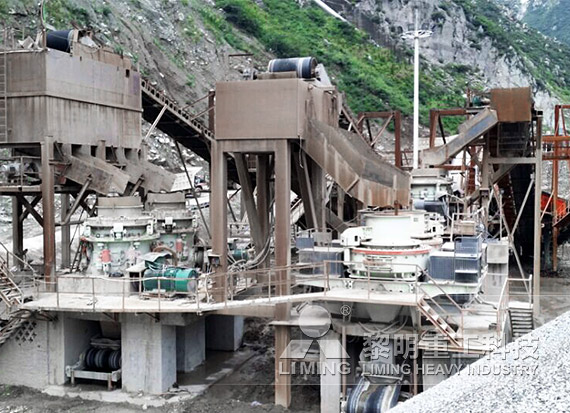
This flow preserves coarse stibnite grains for jigging and tabling while sending controlled fines to flotation, maximizing overall antimony recovery and reducing slime losses.
**Keywords**: antimony ore crushing, stibnite liberation, antimony gravity flotation, brittle sulfide ore crushing, stibnite slime control

Previous: SMP Crusher
Next: SMP Crusher
Antimony ore, dominated by stibnite, is a brittle sulfide mineral used in flame retardants, alloys and specialty chemicals. Stibnite cleaves easily, so aggressive crushing turns valuable antimony mineral into hard-to-recover slime. Most antimony deposi
Antimony ore, dominated by stibnite, is a brittle sulfide mineral used in flame retardants, alloys and specialty chemicals. Stibnite cleaves easily, so aggressive crushing turns valuable antimony mineral into hard-to-recover slime. Most antimony deposits are low-grade and vein-hosted, mixed with quartz, pyrite and calcite. Processing plants rely on a combination of gravity separation for coarse liberated stibnite and flotation for finer grains. Both recovery methods fail when crushing is mismanaged.
A frequent mistake is using impact crushers as the main reduction stage. High-velocity impact shatters stibnite into slime that escapes gravity concentrators and complicates flotation. Feed with high carbonate gangue also creates operational headaches: soft gangue slimes coat stibnite surfaces and depress flotation recovery.
SMP stibnite crushing circuits use jaw coarse crushing and low-energy cone crushing in closed circuit. Pre-screening removes soft clay and carbonate fines before they enter the crushing zone. The crushed product is sized into coarse gravity feed and fine flotation feed streams. Barren rock can be pre-sorted after coarse crushing to reduce downstream tonnage.
This flow preserves coarse stibnite grains for jigging and tabling while sending controlled fines to flotation, maximizing overall antimony recovery and reducing slime losses.
**Keywords**: antimony ore crushing, stibnite liberation, antimony gravity flotation, brittle sulfide ore crushing, stibnite slime control
Previous: SMP Crusher
Next: SMP Crusher
 Mobile Cone Crushing Plant for Contract Mineral Processing and Toll Milling
 Phosphorite Crushing for Phosphate Rock Beneficiation and Fertilizer Feed
 Crusher Lubrication System Failures: Prevention for Continuous Metal Ore Operation
 Pebble Crushing Circuits in Semi-Autogenous Grinding (SAG) Mills
 River Pebble Sand Making: Abrasion Control and Iron Removal for Construction SandMobile Cone Crushing Plant for Contract Mineral Processing and Toll MillingPhosphorite Crushing for Phosphate Rock Beneficiation and Fertilizer FeedCrusher Lubrication System Failures: Prevention for Continuous Metal Ore OperationPebble Crushing Circuits in Semi-Autogenous Grinding (SAG) MillsRiver Pebble Sand Making: Abrasion Control and Iron Removal for Construction Sand
