
Search
There are two main production processes for artificial sand: dry sand making and wet sand making. Both methods are widely used in the sand making industry, each with its own advantages and disadvantages, and are suitable for different production enviro
There are two main production processes for artificial sand: dry sand making and wet sand making. Both methods are widely used in the sand making industry, each with its own advantages and disadvantages, and are suitable for different production environments and needs.
Learn about the price of manufactured sand equipment
Dry Sand Making Production Process
Dry sand making is a water-free sand making method suitable for areas with water scarcity. Figure 1 shows a typical dry sand production process, with the following steps:
1. Raw Material Processing: The raw materials pass through a vibrating feeder and screening machine to remove dirt before entering the coarse and secondary crushing stages.
2. Crushing and Screening: After coarse and secondary crushing, the ore is inspected and screened, separating the ore into three fractions: ore that does not meet the particle size requirements is returned to the secondary crushing machine for further crushing; ore with a medium particle size is directly used as finished aggregate; and ore below a certain particle size is fed into a vertical sand making machine for shaping and sand production.
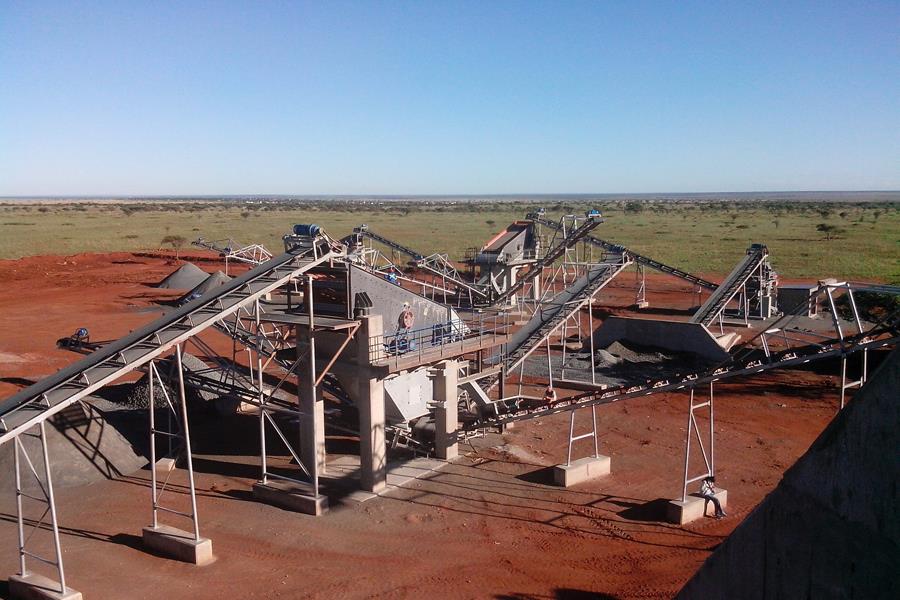
3. Stone Powder Processing: Stone powder generated during the sand making process is collected by a powder classifier and air dust removal equipment and then stored in a sealed stone powder silo.
Main Advantages:
1. Low Moisture Content: The finished aggregate and manufactured sand have a low moisture content, generally no higher than 2%, allowing for direct transportation or use. They will not freeze in sub-zero winter temperatures, allowing for continuous production year-round.
2. Controllable Stone Dust Content: By adjusting the air volume and pressure of the powder concentrator, the stone dust content in the finished sand can be controlled, meeting civil engineering and urban construction standards and enhancing concrete strength.
3. High Resource Utilization: The fine stone dust produced as a byproduct of the production process can be used as a base layer for roadbeds or as a raw material for unfired cement bricks, achieving high resource utilization and zero emissions.
4. Low Production Cost: No water is required, reducing the need for water supply and drainage equipment and sewage treatment. The system is simple, requiring minimal investment, requiring minimal floor space, requiring fewer operators, and achieving high production capacity.
5. Simple Process: The equipment is simple and easily controlled centrally, enabling automated or unmanned production.
6. Environmental Compliance: By controlling the content of soil, weathered rock, and organic matter during the mining phase and utilizing dust collectors at all levels of crushing and screening, the finished sand and gravel aggregates can directly meet the standards for water conservancy projects and urban construction.
Main Disadvantages:
1. High Raw Material Requirements: The process is sensitive to impurities such as soil and organic matter and requires strict control, otherwise it can easily clog and overload.
2. Low Cleanliness: The finished aggregate may have residual stone dust on its surface, resulting in a poor appearance.
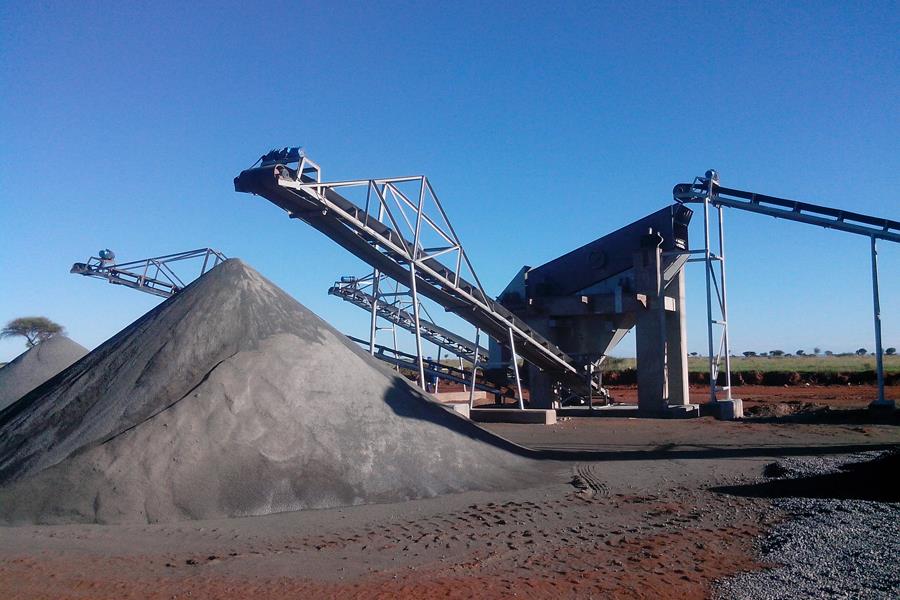
3. Dust Pollution: The crushing, screening, and sand making stages generate significant dust, requiring strict equipment containment and dust removal requirements, requiring the equipment to be located in a fully enclosed facility.
Wet Sand Production Process: Wet sand production uses water as the working medium throughout the entire sand and gravel aggregate production process, making it suitable for areas with abundant water resources. The production process is as follows:
1. Raw Material Processing: The raw materials pass through a vibrating feed screen and enter the crushing stage.
2. Crushing and Screening: After coarse and medium crushing, the ore is inspected and screened to separate large and small aggregates.
3. Sand Washing: The small aggregate enters the sand making machine for shaping and sand production. The sand washing machine then removes dirt and stone dust to produce finished sand.
Main Advantages:
High Cleanliness: The finished sand and gravel aggregates have a good appearance, and dirt and stone dust are carried away by the water flow, eliminating dust and air pollution.
Main Disadvantages:
1. High Water Consumption: 2-3.5 tons of water are consumed per ton of sand and gravel. The mud and dust wastewater generated during the sand making process, if directly discharged, pollutes the environment, and recycling requires significant equipment and costs.
2. Low Yield: The finished sand output is low, the proportion of particles smaller than 0.16 mm does not meet the standard, and the moisture content is high, which does not meet the requirements of the "Specifications for Hydraulic Concrete Construction."
3. High Production Cost: The finished product contains almost no stone dust, requiring increased cement usage, increasing production costs.
4. Complex Equipment: Requires extensive water supply and drainage and sewage treatment equipment, resulting in significant investment, large land area, difficult operation and management, and high unit costs.
5. High Dependence on Water Resources: Suitable only for mining areas with abundant water resources, wet sand production cannot function normally in winter when temperatures drop below zero.
Summary
Dry and wet sand production each have their advantages, and the choice of process should be based on the specific production environment and needs. Dry sand production is suitable for water-scarce areas, offering low cost, high production capacity, and environmental protection, but it requires high raw material cleanliness. Wet sand production is suitable for water-rich areas, resulting in high-purity sand and gravel aggregates, but it consumes a lot of water, is costly, and requires complex equipment.
In my country, where water resources are severely scarce and polluted, dry production processes are more reasonable. If conditions permit, semi-dry production processes can be considered, with wet production processes being the last resort.

Previous: SMP Crusher
Next: SMP Crusher
There are two main production processes for artificial sand: dry sand making and wet sand making. Both methods are widely used in the sand making industry, each with its own advantages and disadvantages, and are suitable for different production enviro
There are two main production processes for artificial sand: dry sand making and wet sand making. Both methods are widely used in the sand making industry, each with its own advantages and disadvantages, and are suitable for different production environments and needs.
Learn about the price of manufactured sand equipment
Dry Sand Making Production Process
Dry sand making is a water-free sand making method suitable for areas with water scarcity. Figure 1 shows a typical dry sand production process, with the following steps:
1. Raw Material Processing: The raw materials pass through a vibrating feeder and screening machine to remove dirt before entering the coarse and secondary crushing stages.
2. Crushing and Screening: After coarse and secondary crushing, the ore is inspected and screened, separating the ore into three fractions: ore that does not meet the particle size requirements is returned to the secondary crushing machine for further crushing; ore with a medium particle size is directly used as finished aggregate; and ore below a certain particle size is fed into a vertical sand making machine for shaping and sand production.
3. Stone Powder Processing: Stone powder generated during the sand making process is collected by a powder classifier and air dust removal equipment and then stored in a sealed stone powder silo.
Main Advantages:
1. Low Moisture Content: The finished aggregate and manufactured sand have a low moisture content, generally no higher than 2%, allowing for direct transportation or use. They will not freeze in sub-zero winter temperatures, allowing for continuous production year-round.
2. Controllable Stone Dust Content: By adjusting the air volume and pressure of the powder concentrator, the stone dust content in the finished sand can be controlled, meeting civil engineering and urban construction standards and enhancing concrete strength.
3. High Resource Utilization: The fine stone dust produced as a byproduct of the production process can be used as a base layer for roadbeds or as a raw material for unfired cement bricks, achieving high resource utilization and zero emissions.
4. Low Production Cost: No water is required, reducing the need for water supply and drainage equipment and sewage treatment. The system is simple, requiring minimal investment, requiring minimal floor space, requiring fewer operators, and achieving high production capacity.
5. Simple Process: The equipment is simple and easily controlled centrally, enabling automated or unmanned production.
6. Environmental Compliance: By controlling the content of soil, weathered rock, and organic matter during the mining phase and utilizing dust collectors at all levels of crushing and screening, the finished sand and gravel aggregates can directly meet the standards for water conservancy projects and urban construction.
Main Disadvantages:
1. High Raw Material Requirements: The process is sensitive to impurities such as soil and organic matter and requires strict control, otherwise it can easily clog and overload.
2. Low Cleanliness: The finished aggregate may have residual stone dust on its surface, resulting in a poor appearance.
3. Dust Pollution: The crushing, screening, and sand making stages generate significant dust, requiring strict equipment containment and dust removal requirements, requiring the equipment to be located in a fully enclosed facility.
Wet Sand Production Process: Wet sand production uses water as the working medium throughout the entire sand and gravel aggregate production process, making it suitable for areas with abundant water resources. The production process is as follows:
1. Raw Material Processing: The raw materials pass through a vibrating feed screen and enter the crushing stage.
2. Crushing and Screening: After coarse and medium crushing, the ore is inspected and screened to separate large and small aggregates.
3. Sand Washing: The small aggregate enters the sand making machine for shaping and sand production. The sand washing machine then removes dirt and stone dust to produce finished sand.
Main Advantages:
High Cleanliness: The finished sand and gravel aggregates have a good appearance, and dirt and stone dust are carried away by the water flow, eliminating dust and air pollution.
Main Disadvantages:
1. High Water Consumption: 2-3.5 tons of water are consumed per ton of sand and gravel. The mud and dust wastewater generated during the sand making process, if directly discharged, pollutes the environment, and recycling requires significant equipment and costs.
2. Low Yield: The finished sand output is low, the proportion of particles smaller than 0.16 mm does not meet the standard, and the moisture content is high, which does not meet the requirements of the "Specifications for Hydraulic Concrete Construction."
3. High Production Cost: The finished product contains almost no stone dust, requiring increased cement usage, increasing production costs.
4. Complex Equipment: Requires extensive water supply and drainage and sewage treatment equipment, resulting in significant investment, large land area, difficult operation and management, and high unit costs.
5. High Dependence on Water Resources: Suitable only for mining areas with abundant water resources, wet sand production cannot function normally in winter when temperatures drop below zero.
Summary
Dry and wet sand production each have their advantages, and the choice of process should be based on the specific production environment and needs. Dry sand production is suitable for water-scarce areas, offering low cost, high production capacity, and environmental protection, but it requires high raw material cleanliness. Wet sand production is suitable for water-rich areas, resulting in high-purity sand and gravel aggregates, but it consumes a lot of water, is costly, and requires complex equipment.
In my country, where water resources are severely scarce and polluted, dry production processes are more reasonable. If conditions permit, semi-dry production processes can be considered, with wet production processes being the last resort.
Previous: SMP Crusher
Next: SMP Crusher
 What equipment is used to process limestone into machine-made sand?
 Mobile cone crusher production line
 Environmentally friendly sand and gravel production line equipment
 What equipment is needed for a 2000 tons per day gravel production line?
 What are the equipment for producing sand and gravel crushing and how much does it cost?What equipment is used to process limestone into machine-made sand?Mobile cone crusher production lineEnvironmentally friendly sand and gravel production line equipmentWhat equipment is needed for a 2000 tons per day gravel production line?What are the equipment for producing sand and gravel crushing and how much does it cost?